This Week in Open Source: September 28, 2026
Starlette ships built-in OpenTelemetry tracing, PyMongo patches three CVEs, Prisma 8's release candidate carries real breaking changes, and a Rails issue exposes a hidden memory cost on every 404.
Starlette ships built-in OpenTelemetry tracing, PyMongo patches three CVEs, Prisma 8's release candidate carries real breaking changes, and a Rails issue exposes a hidden memory cost on every 404.

Mongoid 7.6.2 looks like a routine patch but closes four real security gaps, from NoSQL injection to ReDoS.
Security patches from Predis, Express, and Doorkeeper, plus new Anthropic and OpenAI SDK releases and real OpenTelemetry tracing landing in MongoDB's Python driver.
NestJS v12 ships native observability via @nestjs/observe, Oban unifies config, Phoenix switches JSON libraries, and Symfony patches three branches.
Rails batches schema reads, node-mysql2 lands 3-6x perf wins, OpenAI Python SDK hits v3.0.0, and Starlette proposes native OTel tracing.
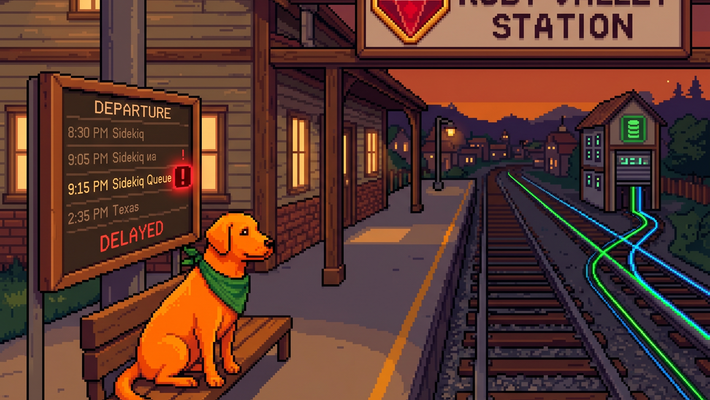
A Rails-specific comparison of the best error monitoring tools in 2026. Covers Scout Monitoring, Sentry, Honeybadger, AppSignal, New Relic, and Skylight with honest tradeoffs for each.

How to find, fix, and prevent N+1 queries in Rails applications. Covers ActiveRecord includes, preload, eager_load, the Bullet gem, Sidekiq jobs, and automatic detection with Scout.

A look at APM tools for Ruby on Rails as of March 2026.
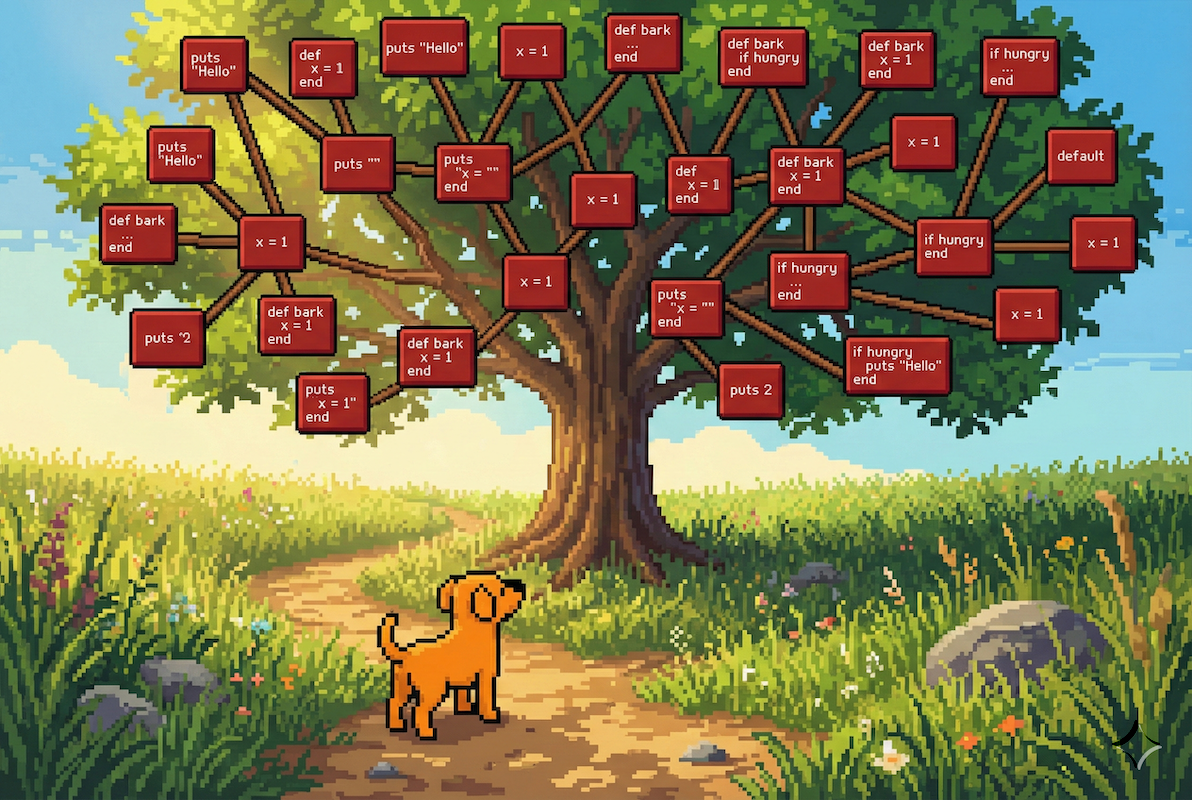
A relatively deep dive on the new built-in Ruby parser and options for manipulating the AST for fun and observability.

Learn how to boost Ruby on Rails app performance and reduce server load in this second part by understanding Rails cache stores: their configuration and memory stores.

Learn how to boost Ruby on Rails app performance and reduce server load with cache strategies like page, action, and Russian Doll caching, cache stores, and more.
Finding profilers that reliably work proves to be a bigger challenge than most devs think. Here's a summary of the Rails profiler ecosystem: what works, what doesn't, and each profiler's niche.

Ractor: Ruby's Version of the Actor Model Concurrency has always been an important factor in determining the feasibility of a programming environment. If your programming language can run multiple...
Even though Ruby is the go-to for many start-ups, it still hasn't been as powerful as its counterparts in areas such as linting, type validation, etc. This, however, is not true for long, as the...
The last 3,650 days of my professional life have been focused on making Rails apps faster. Below are five lessons I've learned the hard way. 1. Facts alone won't convince the business folk to care about performance The typical pitch to prioritize making an app faster & more reliable goes ...

Ruby may be over 25 years old, but it remains popular in the software community for its focus on programmer happiness. Building software with Ruby often involves leveraging one or more popular frameworks for the purpose of increasing productivity by relying on existing solutions to common problems. Ruby frameworks generally ...
Ruby Garbage Collection: More Exciting than it Sounds Running software uses computer memory for data structures and executable operations. How this memory is accessed and managed depends on the...
Lambdas are a powerful feature of the Ruby language. They allow you to wrap logic and data into a portable package. In this post, we’ll cover how and when to use lambdas. You’’ll also learn about the difference between lambdas and Procs, and the performance profile of lambda functions. The ...
Learn how to use counter cache in your rails app, parent-child associations, counter cache best practice.

If you are using Ruby on Rails, caching might be one of the best tools on your belt to build a better application. The idea behind caching in Rails is to serve thousands of concurrent users on a single server with a single database attached. Let’s take a look at some of the benefits caching can provide.
In this blog post, we'll be going through two server-side scripting languages; Python and Ruby with focus on comparing the performance and other factors that might help you in deciding which language to pick over the other for your web application.

What is exception handling? Software systems can be quite prone to error conditions. Systems that involve user interaction are more vulnerable to exceptions as they attract errors at multiple fronts. Errors can take many forms - syntactical errors, network errors, form input errors, invalid authentication errors etc. I
AutoInstruments wraps instrumentation around code expressions in Ruby on Rails controllers by inspecting Ruby’s Abstract Syntax Tree (AST) as code is loaded. These code expressions then appear in traces, just like the many libraries Scout already instruments.

Falcon aims to increase throughput of web applications by using Ruby’s Fibers to continue serving requests while other requests are waiting on IO (ActiveRecord queries, network requests, file read/write, etc).

One of the joys of using the Ruby language is the many different ways that you can solve the same problem, it’s a very expressive language with a rich set of libraries. But how do we know which is the best, most efficient, use of the language? When we are talking about algorithms which are critical to the performance of your application, understanding the most efficient approach to take is essential. Perhaps you’ve been using Scout to hunt down issues, and now that you have found an issue, you want to optimize it. Ruby’s Benchmark module provides a very handy way for you to compare and contrast possible optimizations, and when used in conjunction with a good APM solution it will ensure that you have all bases covered. Let’s take a look at how you can get started with it today!

With the official release of Rails 6 just around the corner, we round up all the major new features coming your way. It is an exciting release due to some big features coming upstream from the Basecamp and GitHub projects. Amongst the many minor updates, useful tweaks and bug fixes, Rails 6 will ship with two completely new frameworks: ActionText and ActionMailbox, and two big scalable-by-default features: parallel testing and multiple database support. So set your Gemfile to get Rails 6.0.0.rc1 and let’s get started!

The Ruby app server ecosystem has consolidated around three app servers: Unicorn, Puma, and Passenger 5. What specific problems must an app server solve for Ruby? How do you pick the right app server?
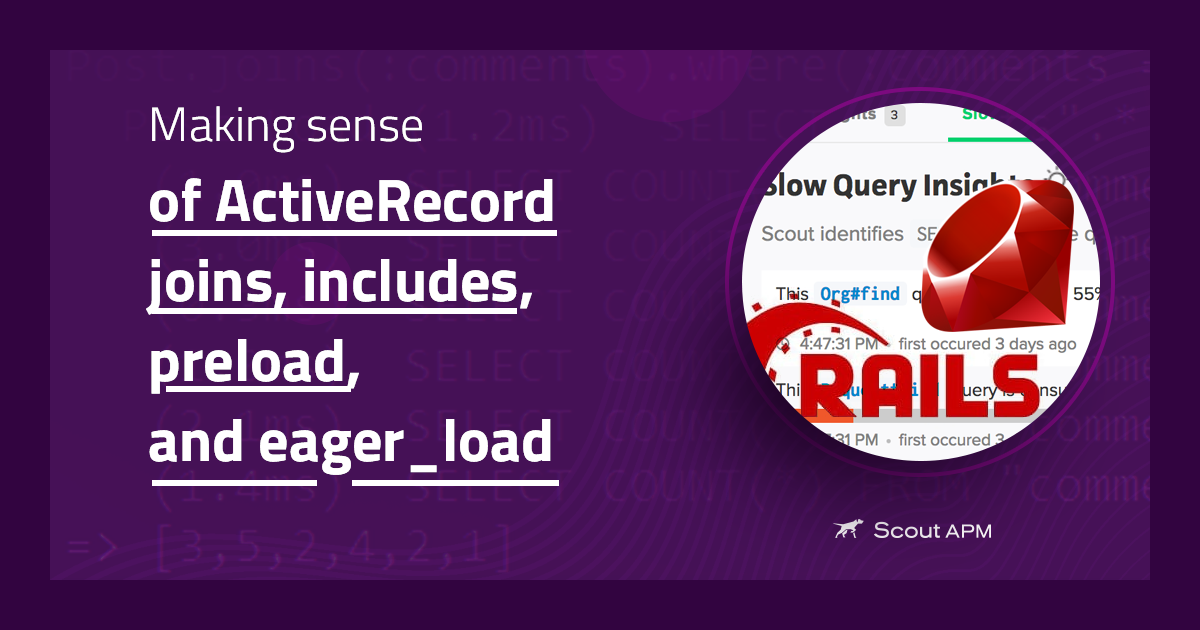
Like a pair of jumper cables, ActiveRecord's joins , includes , preload , and eager_load methods are incredibly useful, but also very dangerous when used incorrectly. Knowing when and where to use each approach - and even when to combine them - can save you considerable trouble.
If you are a Rails developer, you have probably used Rails Logger. Here is how to get the most out of it.
If you've been around the Ruby/Rails ecosystem for a bit you've likely heard the term 'background job' or 'offline processing'. But what does that actually mean? How do you know which tasks are suitable to be processed 'in the background'? Once you define those tasks, how do pick the right ...
Having the ability to drive your development using just a keyboard is very productive. However, when you are using a terminal and have to copy the output of a command to use it somewhere else, it breaks your flow, you need to move your hands away from your keyboard, use ...

Richard Schneeman (better known as Schneems) recently wrote about how he reduced his database server load by 80% ...with one simple trick . In the Hacker News discussion that followed, much of the debate was on the merits of using an ORM like ActiveRecord...or not: In every case I can ...
When I do a code review, one of the scariest things I see is logic like this: if Rails.env.production? do_additional_work end Why? Your beautiful tests and tightly integrated CI system won't execute that code. You won't see that code execute as you refresh your browser in development. From syntax errors ...
Rails dominates Ruby web frameworks: the next most popular framework, Sinatra, has 5% of the popularity of Rails . However, that doesn't mean non-Rails frameworks like Sinatra and Grape don't have their place. When does it make sense to step away from ActionController and use another framework? What are the ...
A couple of years ago I visited Argentina. I have trouble enough pronouncing my limited English vocabulary and I don't speak Spanish, but after a bit of time, it was pretty easy to order food, buy groceries, and use a taxi. However, occasional hangups that happen during my regular life ...
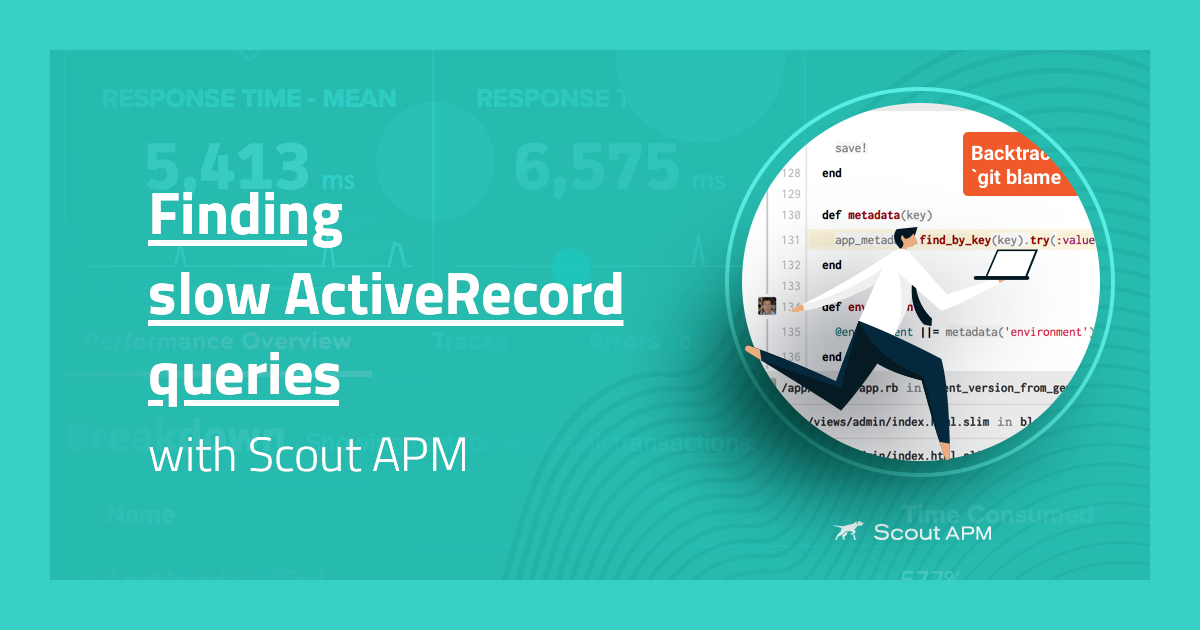
Once your Rails app begins seeing consistent traffic, slow SQL queries will likely rear their ugly head, but how can you easily tell where your app is slowing down?
If you've followed along with our previous episodes, we've covered many different aspects of setting up a production service. We've used many different products to simplify the day-to-day operations of running and maintaining an application. We've used Scout for monitoring our application, LogDNA for aggregating our logs, HoneyBadger for our ...
Looking for a fresh, 2018 approach to deploying a Rails app to AWS? We've partnered with DailyDrip on a series of videos to guide you through the process. We're covering how to Dockerize a Rails app, AWS Fargate, logging, monitoring, setting up load balancing, SSL, CDN, and more. In the ...
It's a lot harder connecting the dots of the request lifecycle when the final response is built from a number of separate microservices. However, distributed tracing - which connects a transaction trace across microservices - is getting a lot easier. In this short tutorial, I'll show how to add distributed ...
DevTrace is a performance widget for your Rails applications in development. It sits unobtrusively in the corner of your page, just waiting to drop insight on your application: See stack traces, SQL timings, and more with just a click! This kind of insight is powerful. You can see how your ...
Teaser for a soon-to-be released capability: Overview metrics for all your background jobs Chart throughput, latency, error rate, and more. Detailed drill-down on slow jobs See what's making the job slow, identify N+1 queries, and more. Tech preview - want in? Background job monitoring currently supports sidekiq, and is tech ...
The Scout Java Application Monitoring Agent is under active development and we have a few spots open in our alpha program. Email support@scoutapp.com for access. For many Rubyists, Ruby is the first language that they learn and perhaps the only programming language that they know. Ruby provides an excellent gateway ...
During a team camp among the lofty peaks of Breckenridge, Colorado, we talked a lot about the future of Scout and monitoring in general. Big mountains and nature have a way of doing that. One thing that was getting our nerd juices flowing: Go . At Monitorima in May, it ...