Resque Performance Monitoring
Per-job timing, queue metrics, memory bloat detection, and error tracking for your Resque workers. Scout's Ruby agent instruments Resque automatically with no configuration. Connects job failures to the full trace and surrounding log lines so you see exactly what went wrong.
 Errors, Logs, and Traces
Errors, Logs, and Traces for Every Resque Job
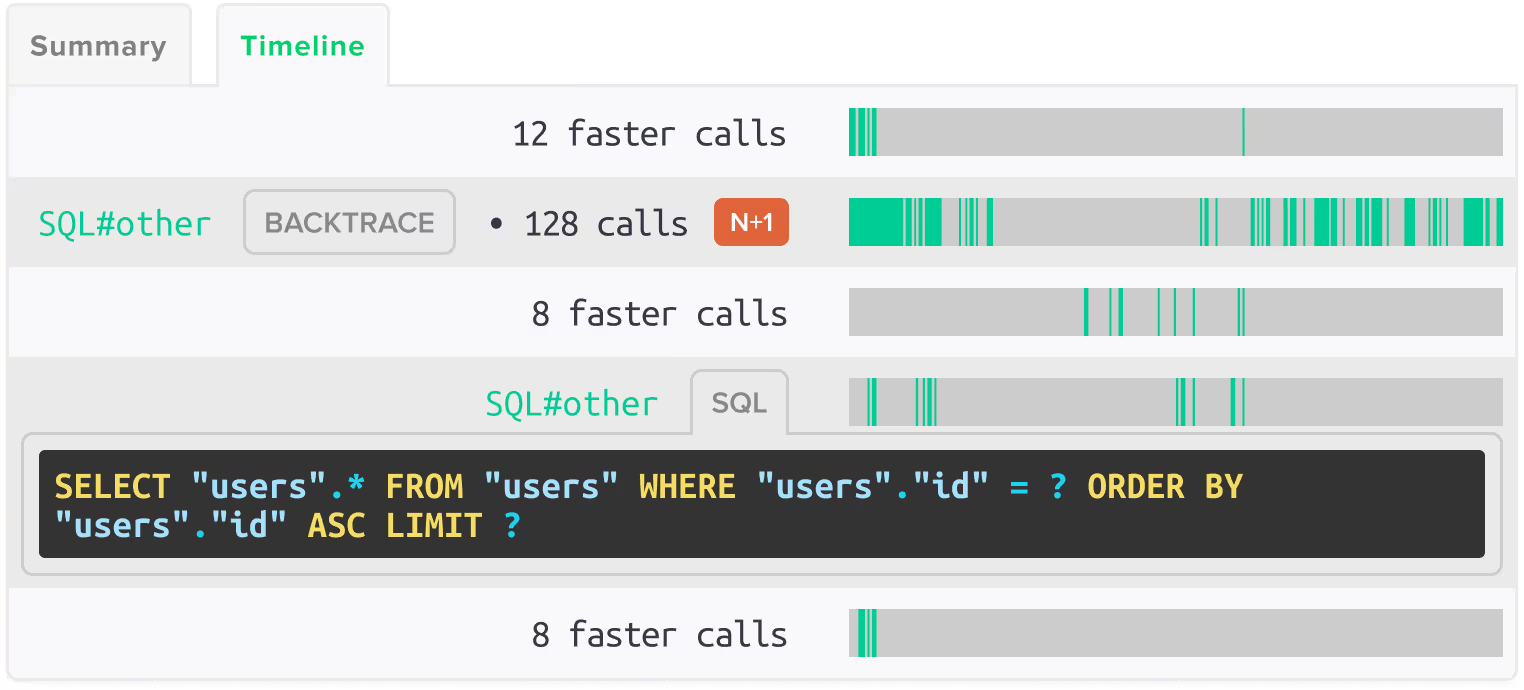
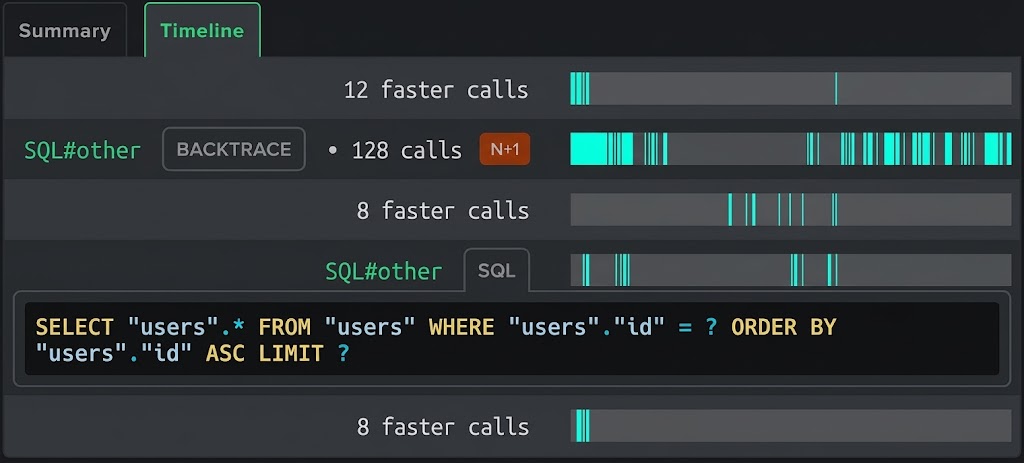
Scout connects Resque job failures to the full transaction trace and surrounding log lines in a single view. When a worker raises an exception, you see the error, the job trace with timing for every operation, and the log output together. No correlation by timestamp, no switching between tools.

Error Monitoring
Automatic exception capture for every Resque worker class. Errors are grouped by job type, linked to the originating trace, and enriched with job context so you know which workers are failing and why.

Log Management
Log output from Resque workers is enriched with trace context. Filter logs by trace ID to see exactly what a specific job execution did, including any ActiveRecord queries, Redis calls, and HTTP requests it made.

App Traces
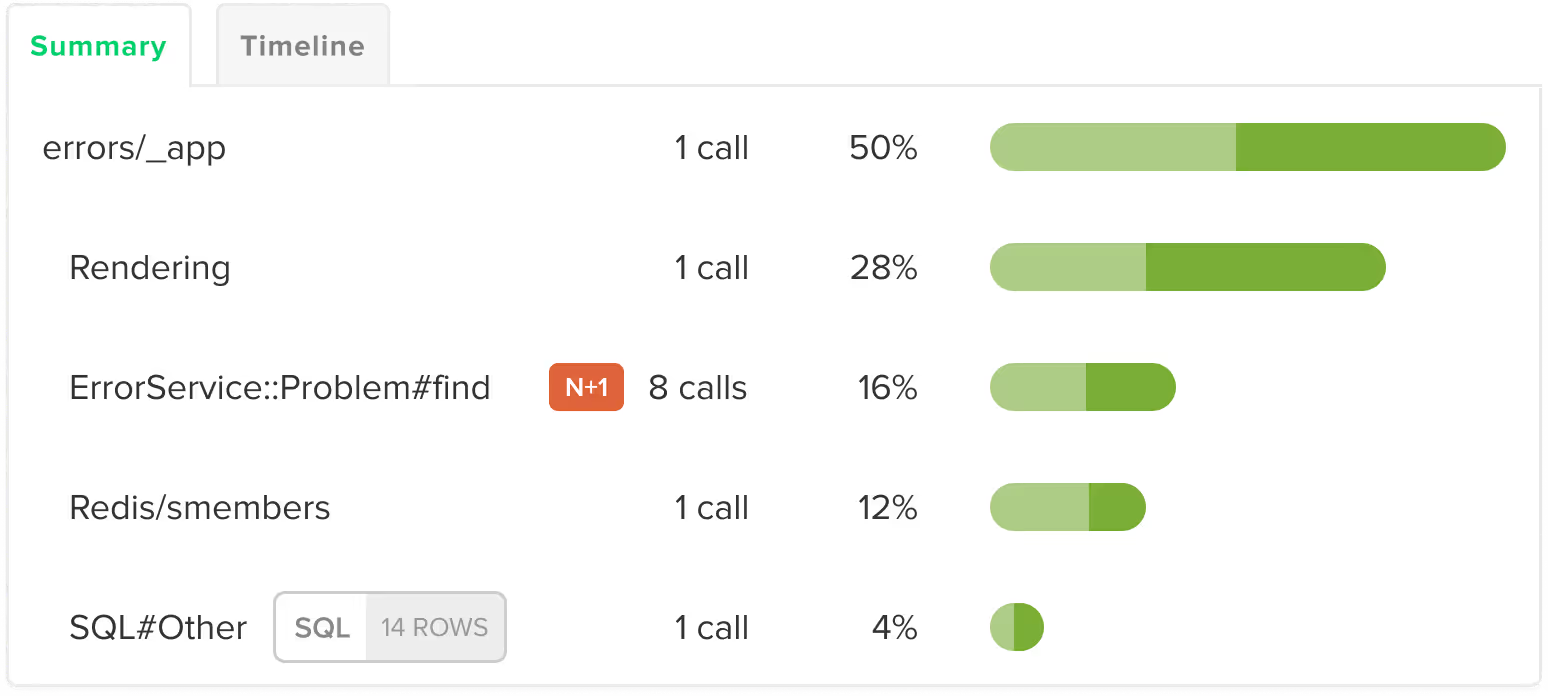
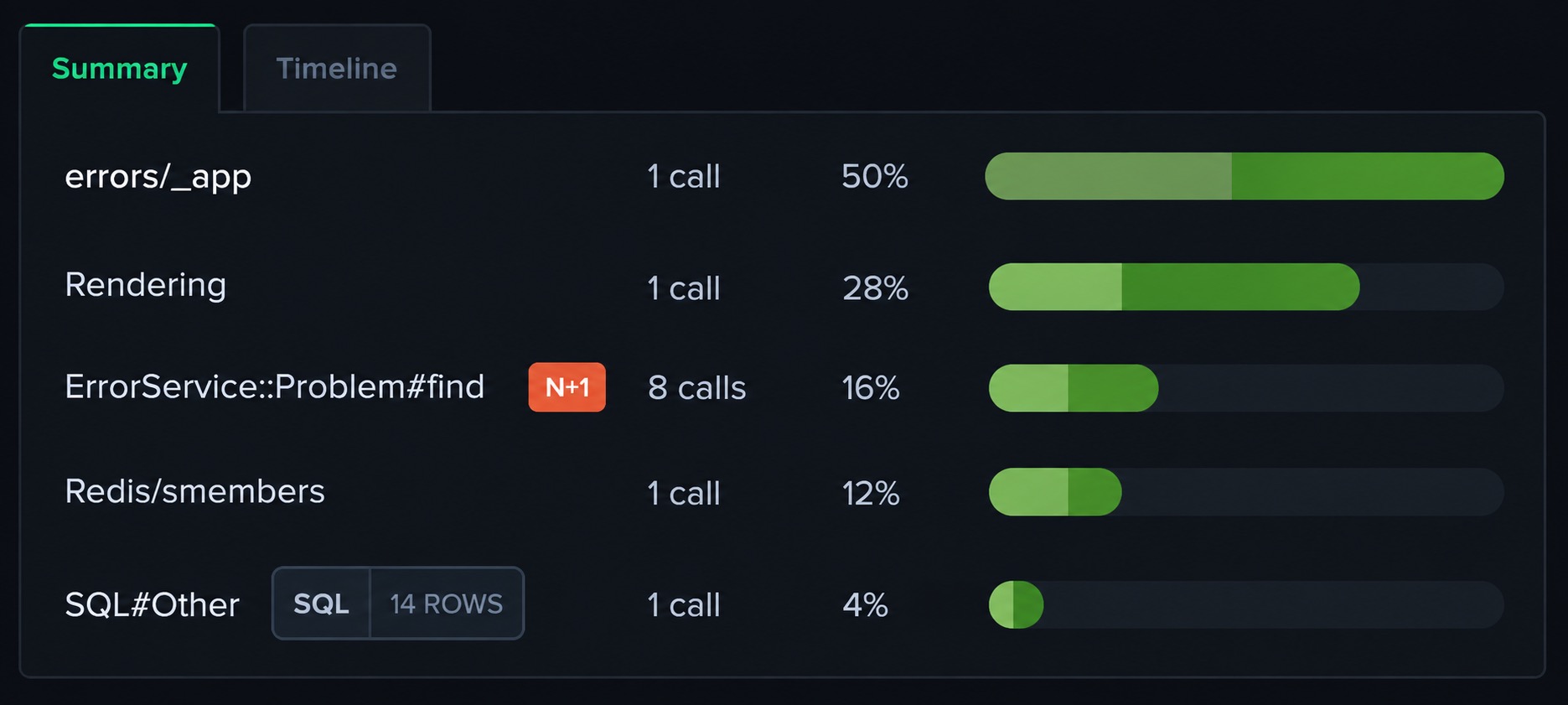
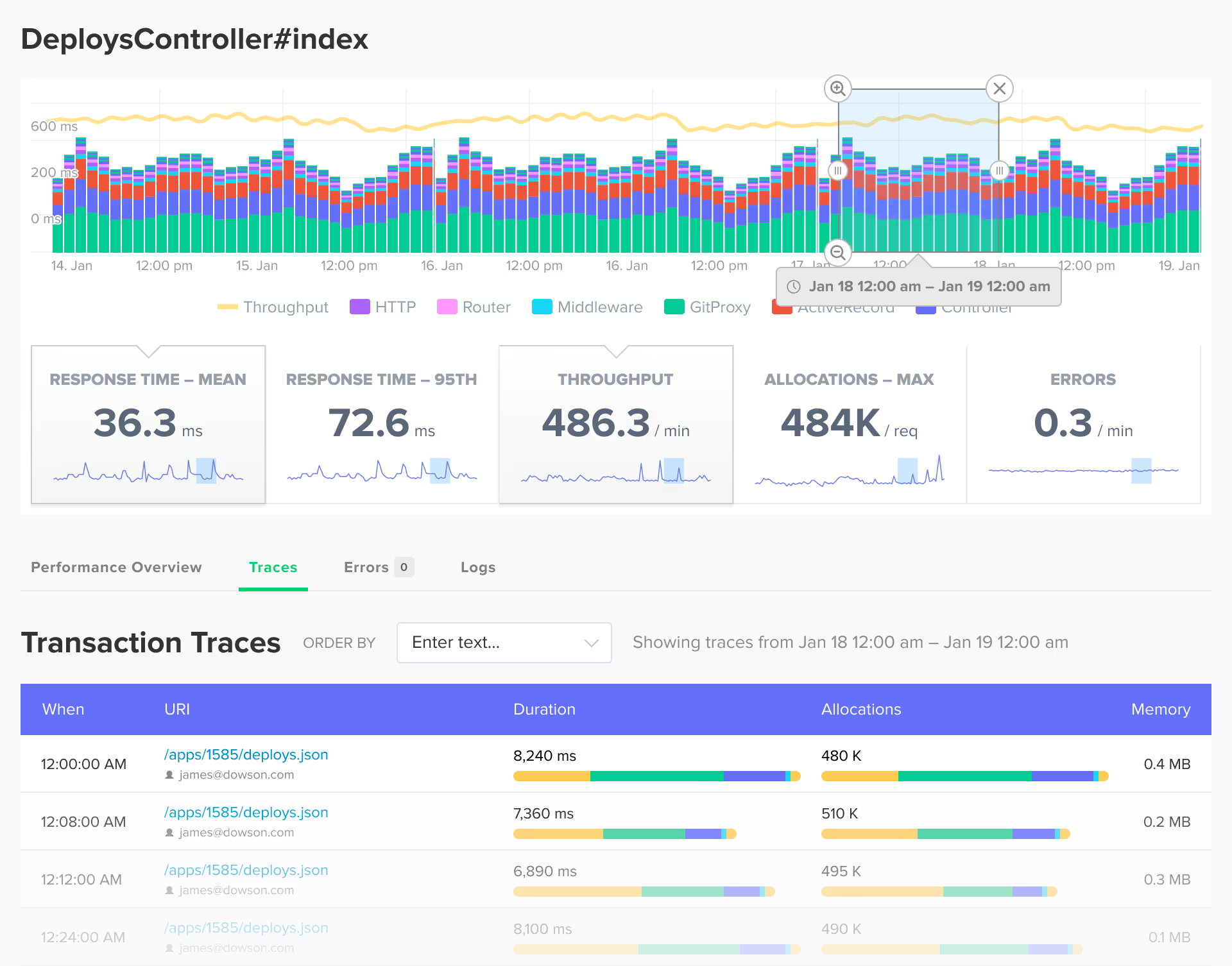
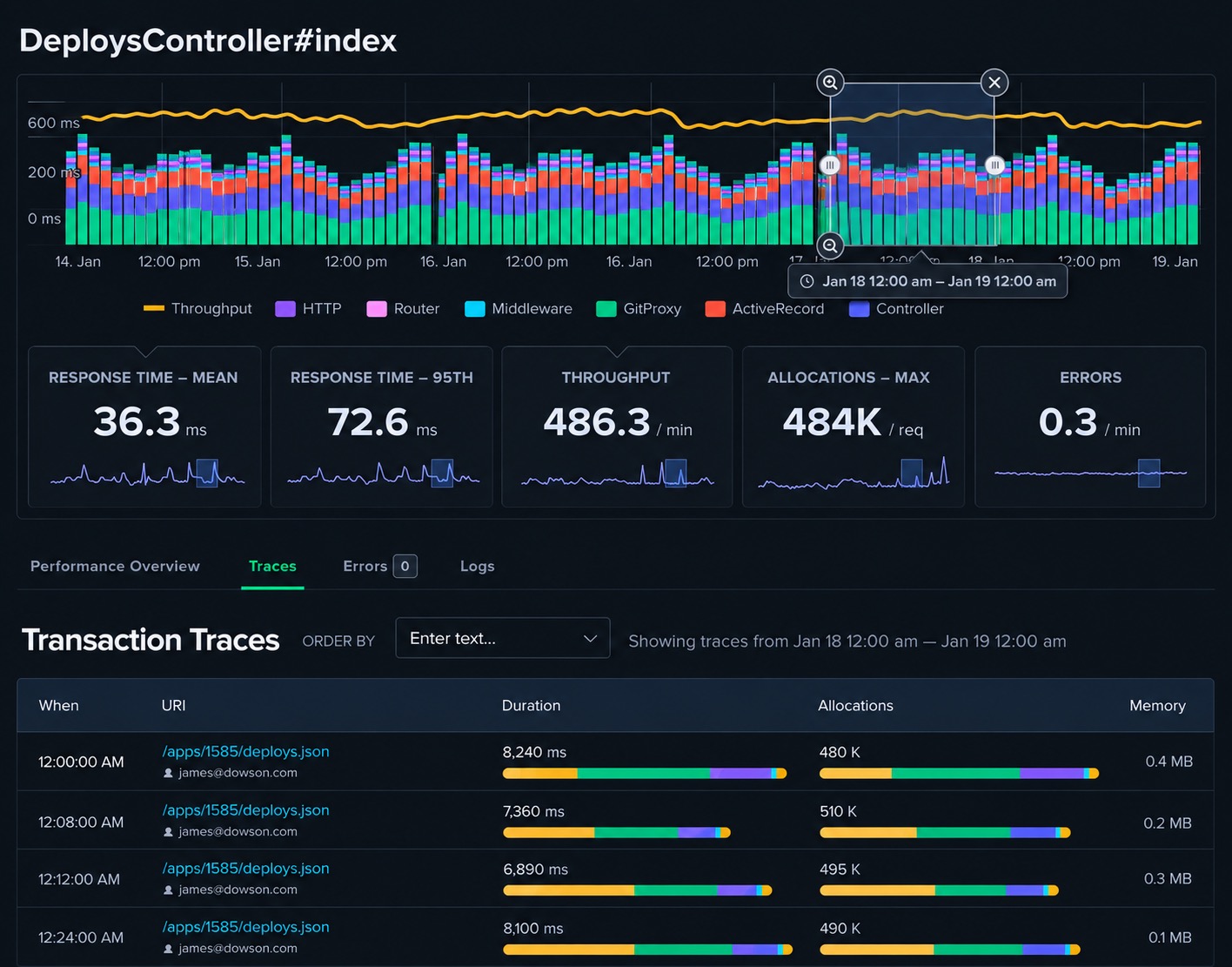
Every Resque job execution appears as its own transaction in Scout with per-operation timing. See time spent in ActiveRecord, Redis, external HTTP calls, and your application code broken out by job class and queue.
 Query Analysis
N+1 Detection Inside Resque Jobs
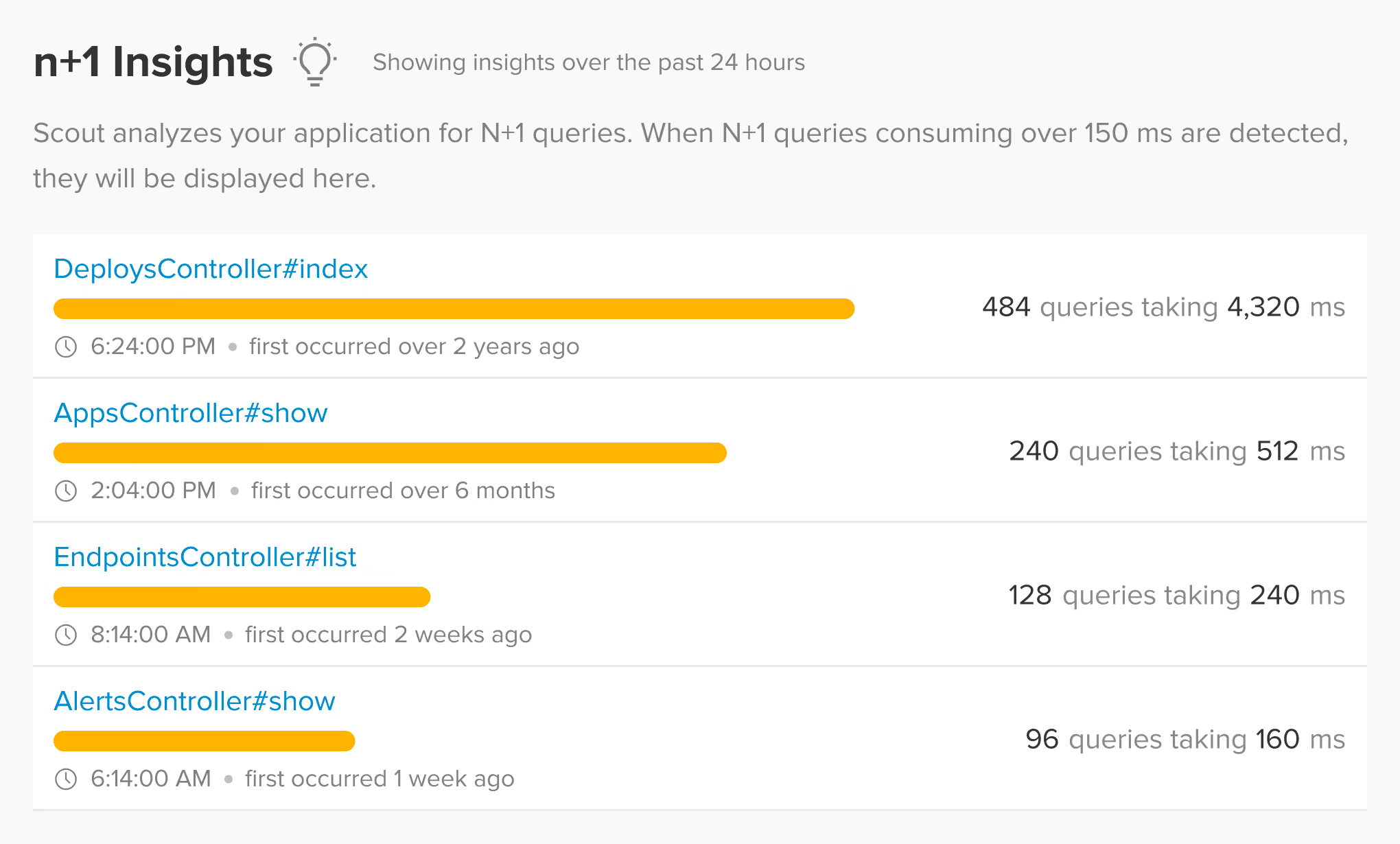
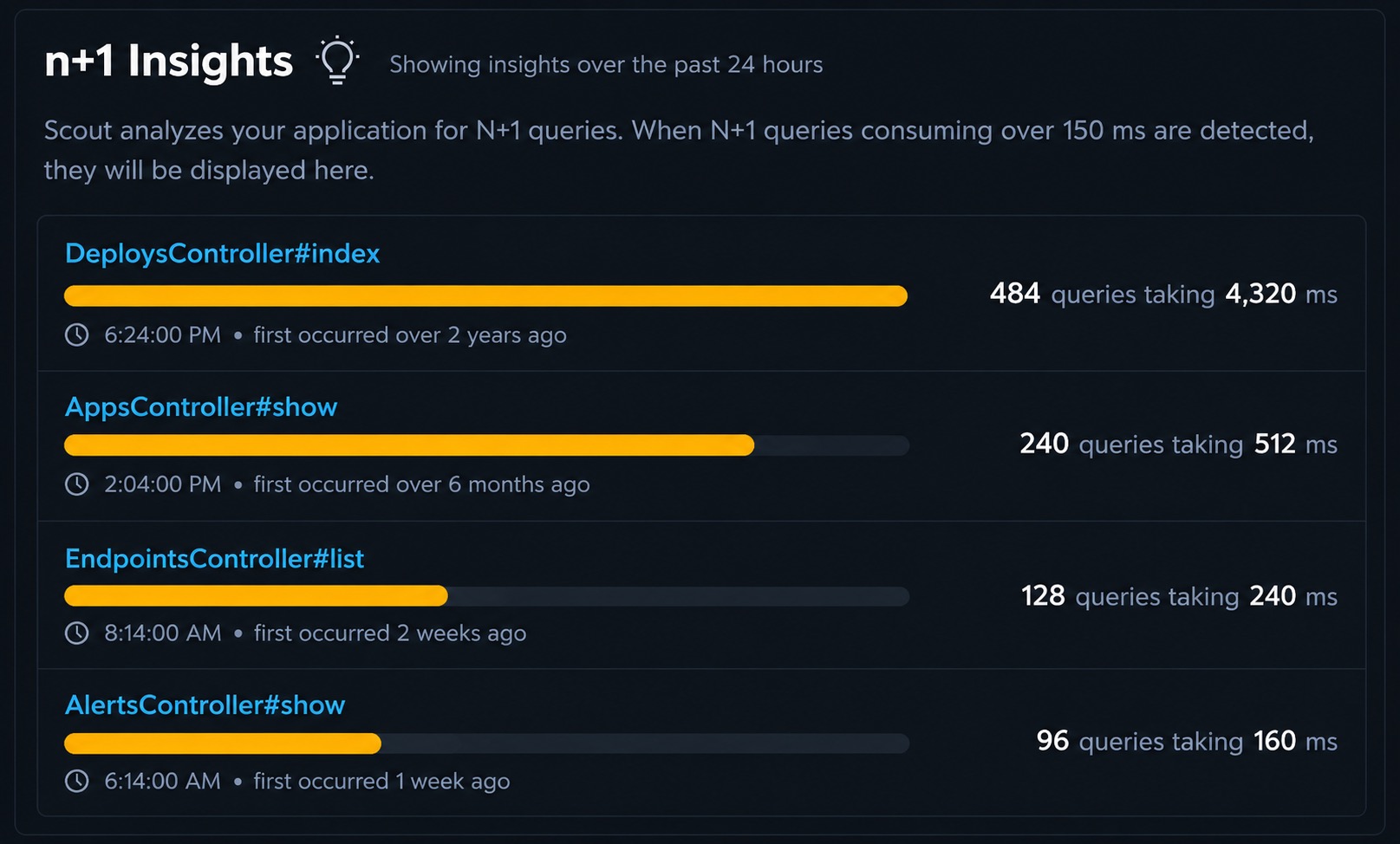
Scout automatically detects N+1 query patterns in ActiveRecord within Resque jobs. If a background job is triggering repeated queries in a loop, Scout identifies the pattern, shows the code location, and reports the total performance impact. No configuration required.
 Auto-Instrumentation
What Scout Instruments in Your Resque Workers
Scout's Ruby agent auto-instruments Resque jobs with per-execution timing and error tracking. ActiveRecord queries, Redis calls, and HTTP client requests made inside jobs are all captured automatically. Memory allocation is tracked per job so you can identify which workers are growing memory over time.
 Supported Frameworks
Works with the Resque frameworks you already use
Scout auto-instruments the frameworks and libraries in your stack. No manual configuration required.
Background Jobs
- Resque
- Sidekiq
- GoodJob
- Solid Queue
- DelayedJob
Databases
- ActiveRecord
- Redis
- ElasticSearch
- Mongoid
HTTP Clients
- Net::HTTP
- HTTPClient
- Typhoeus
 Memory Profiling
Memory Bloat Detection for Resque Workers
Resque workers that process large payloads or hold object references across jobs can accumulate memory over time. Scout detects memory bloat at the job level, showing which worker classes and code paths are responsible for memory growth. Requires Ruby 2.1+.
 AI Native
Query Your Resque App Data from AI Assistants and the Terminal
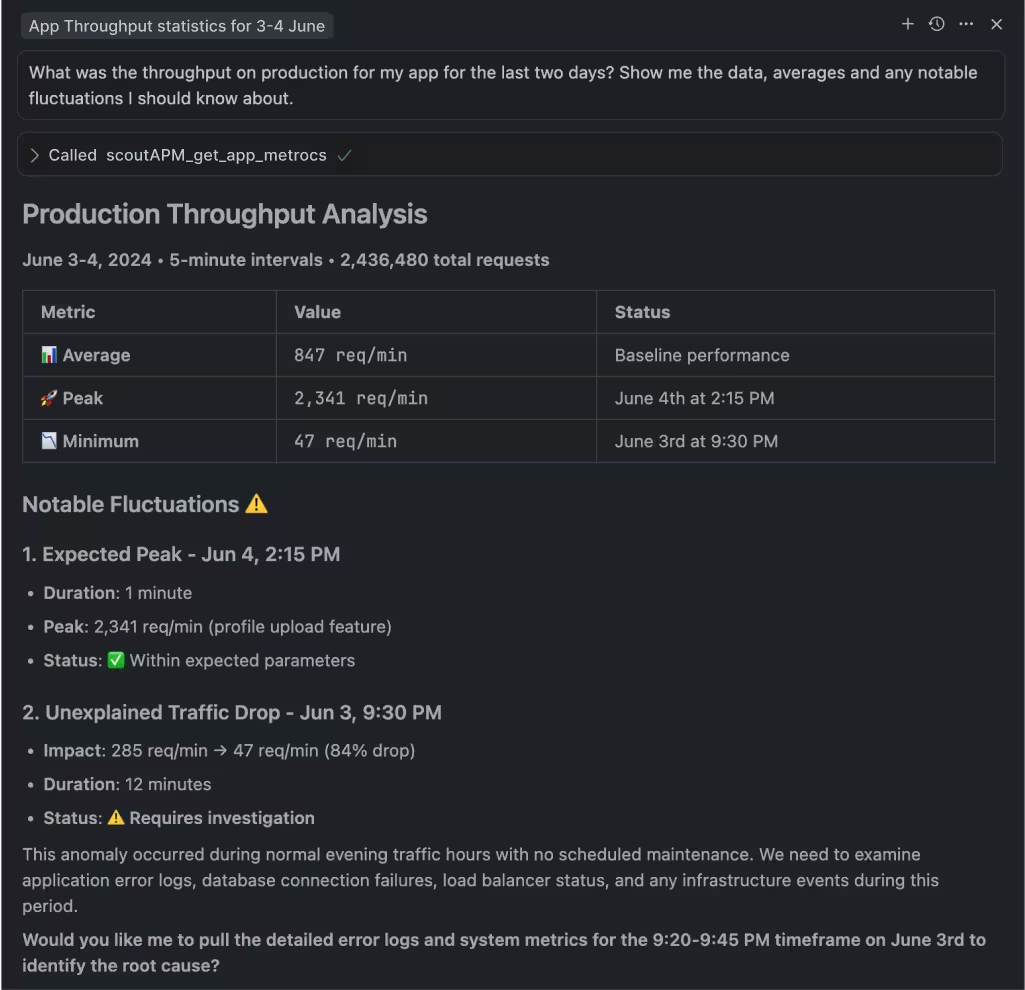
Scout offers hosted and local MCP servers with 17 tools, a Go CLI available via Homebrew with TOON format for LLM output, and a public API. Query your Resque job performance, error rates, and N+1 insights from Claude Code, Cursor, or the terminal.

MCP Server
Hosted or local MCP server with 17 tools covering apps, endpoints, traces, errors, insights, background jobs, and usage data. Works with Claude Code, Cursor, VS Code Copilot, and any MCP-enabled assistant.

Scout CLI
Go binary available via Homebrew. Query app metrics, endpoint performance, traces, error groups, and insights from the terminal. Outputs human-friendly tables or TOON format for LLM consumption.

Public API
Full programmatic access to your monitoring data for building custom integrations, dashboards, or automation workflows.
 Get Started in Minutes
Add Scout to Your Resque App
Get Scout running on your Resque workers in under 3 minutes.
Add to your Gemfile:
gem 'scout_apm'Run:
bundle installDownload your customized config file, placing it at config/scout_apm.yml.
Deploy.
 FAQ
FAQ
Resque Monitoring FAQ
What is the best monitoring tool for Resque?
Scout Monitoring instruments Resque workers automatically. Every job execution appears as its own transaction with per-operation timing, ActiveRecord N+1 detection, memory bloat tracking, and error capture linked to the full job trace.
How do I monitor Resque job performance with Scout?
Add the scout_apm gem to your Gemfile, bundle, drop in a config file, and deploy. Every Resque job execution appears in Scout with timing broken down by ActiveRecord queries, Redis calls, HTTP requests, and application code. No wrapper classes or manual spans required.
How do I detect memory bloat in Resque workers?
Scout tracks memory allocation per Resque job execution and surfaces which worker classes are responsible for memory growth over time. Requires Ruby 2.1+ and gives you the specific worker causing the increase rather than just host-level memory trending up.
Does Scout detect N+1 queries inside Resque jobs?
Yes. Scout automatically detects N+1 query patterns in ActiveRecord within Resque worker executions. If a job triggers repeated queries in a loop, Scout identifies the pattern, shows the code location, and reports the total time wasted.
Does Scout support other Ruby background job frameworks?
Yes. In addition to Resque, Scout auto-instruments Sidekiq, GoodJob, Solid Queue, DelayedJob, Shoryuken, and Sneakers. Each framework appears with per-job timing and error tracking.
Does Scout work with Heroku for Resque apps?
Yes. The Heroku addon automatically configures SCOUT_MONITOR and SCOUT_KEY. You only need to set SCOUT_NAME to identify your application. Scout supports Heroku's dyno-based architecture for Resque applications.
Can I get Scout through AWS Marketplace?
Yes. Scout is available on AWS Marketplace for teams that prefer to consolidate monitoring spend with their AWS account. The same Resque agent and features work regardless of how you purchase. See our AWS Marketplace listing at /aws-marketplace-application-monitoring for details.
Does Scout work with DigitalOcean for Resque apps?
Yes. Scout is available as a DigitalOcean addon. It integrates with your existing DigitalOcean billing and works with Resque applications running on DigitalOcean App Platform or Droplets.