OpenAI Python SDK 3.17.0: a Breaking Change and Six New Features
OpenAI's Python SDK 3.17.0 ships a breaking change to local shell tool output plus six new features. Here's what Python teams need to know before upgrading.
 Scout Blog
OpenAI's Python SDK 3.17.0 ships a breaking change to local shell tool output plus six new features. Here's what Python teams need to know before upgrading.

OAuth/OIDC hardening continues across Symfony, Doorkeeper, and MCP SDKs for a second week running, plus Predis's official CVE release, Mongoid's security patches disguised as a routine bump, and a queued breaking change in openai-python.

Anomaly Detection is out of beta and included on every Scout plan. It learns each endpoint's normal behavior and flags real deviations, no thresholds to configure.
Security patches from Predis, Express, and Doorkeeper, plus new Anthropic and OpenAI SDK releases and real OpenTelemetry tracing landing in MongoDB's Python driver.
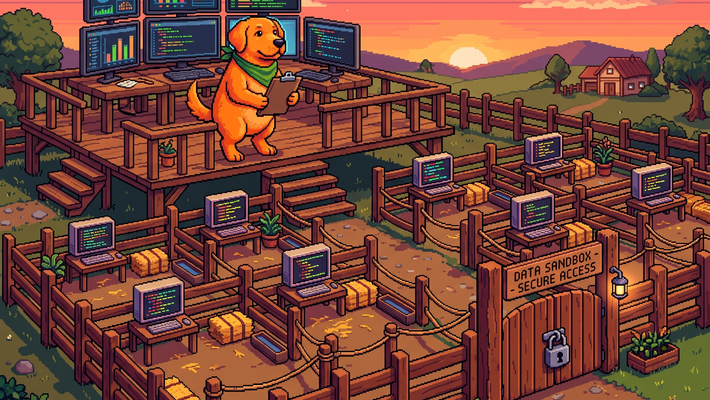
How Scout runs a pen full of Claude agents behind one foreman, inside a sandbox with zero blast radius, credentials and all.

The model isn't the only lever, and it's rarely the one you control. What you feed it is. A look at how Claude actually uses prompts, skills, and AGENTS.md, how to write each one well, and how we wire all three into Corral.
NestJS 12 launches @nestjs/observe, a native observability SDK. We break down what it does, where it falls short, and how it compares to cross-stack APM.
NestJS v12 ships native observability via @nestjs/observe, Oban unifies config, Phoenix switches JSON libraries, and Symfony patches three branches.

Starlette has an open PR to add native OTel spans. Here's what that means if you run Starlette or FastAPI with an APM tool.
Rails batches schema reads, node-mysql2 lands 3-6x perf wins, OpenAI Python SDK hits v3.0.0, and Starlette proposes native OTel tracing.
Create GitHub or Linear issues directly from Scout, Node.js gets complete logs and error monitoring, and Anomaly Detection adds direction filtering to cut alert noise.
AI applications need two layers of monitoring: LLM observability for output quality and token costs, and traditional APM for the application code underneath. A practical guide to what tools cover which layer.